Table of Contents
- Sun Tzu and Modern Business Strategy
- The Enduring Relevance of Ancient Strategic Thought
- Foundational Strategic Assessment: Applying Sun Tzu’s Principles
- Applying Strategic Principles to Market Competition
- Leadership, Organization, and Control in Management
- Application of Strategic Principles in Commercial Operations
- Conclusion: Strategic Imperatives for Modern Management
- Frequently Asked Questions Regarding Sun Tzu and Management
Sun Tzu and Modern Business Strategy
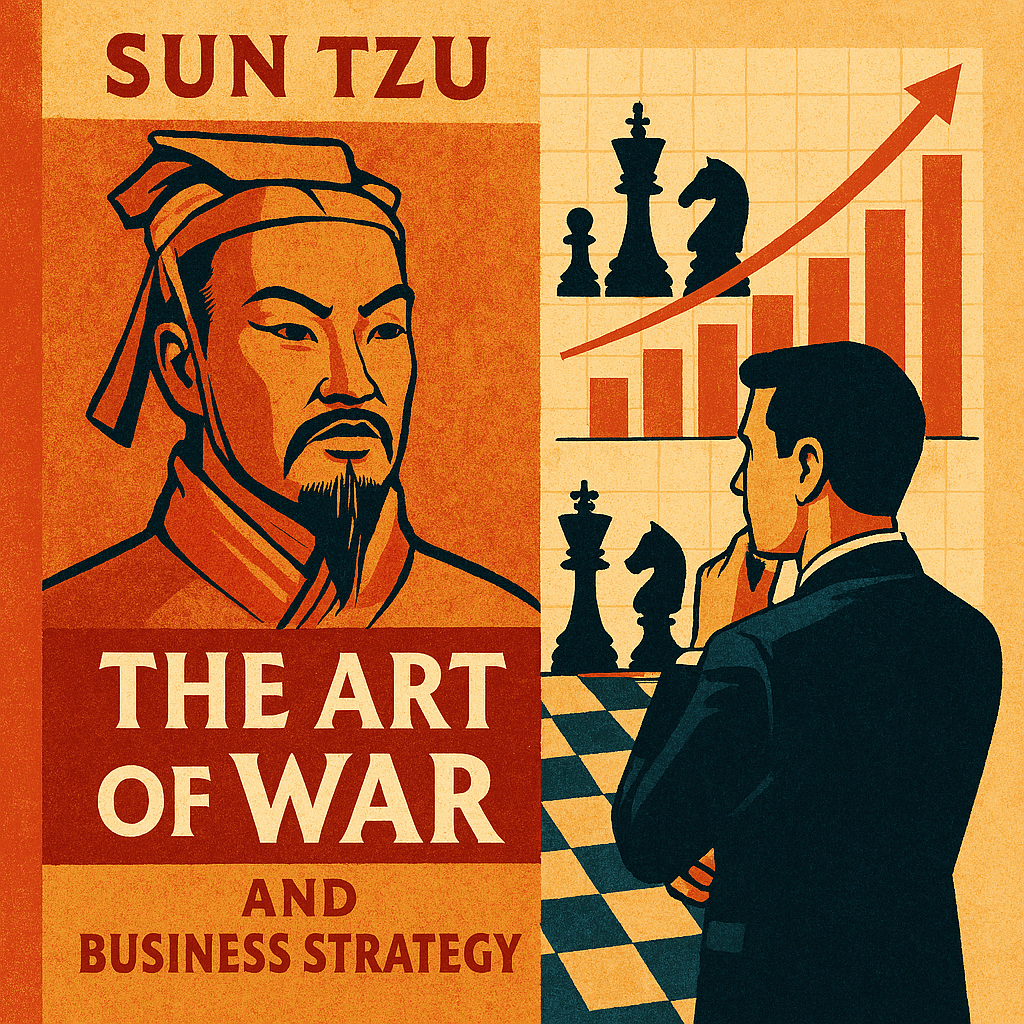
The classical military treatise, The Art of War, authored by the ancient Chinese general Sun Tzu, remains a globally significant text governing strategic thought. Although its initial context was military strategy, the foundational strategic principles exhibit profound utility when applied to contemporary business challenges and competitive environments.
This document examines the core strategic philosophy presented by Sun Tzu and analyzes its direct applicability for business owners, managers, and corporate leadership. The objective is to secure sustainable competitive advantage and increase market share through proven methodology.
The analogy between commerce and armed conflict is frequently utilized in modern management circles. Competition fundamentally requires meticulous resource allocation, detailed intelligence gathering, and decisive executive action, mirroring the requirements of military strategy.
This parallel has been extensively documented by scholars such as Mark R. McNeilly, whose publications, including Sun Tzu and the Art of Business, emphasize the enduring relevance of these leadership principles. Effective business strategy necessitates a structured approach mirroring the careful preparation detailed in The Art of War.
Corporate entities ranging from Amazon.com and 3M to IBM and the Royal Bank of Scotland have applied these strategic principles to address complex business problems. The successful application of Sun Tzu’s philosophy ensures that strategic objectives are attained with optimal efficiency and minimal organizational expenditure, thereby generating a winning strategy in the competitive arena.
The Enduring Relevance of Ancient Strategic Thought
For more than two millennia, the foundational strategic principles outlined in The Art of War by Sun Tzu have influenced global leadership. These concepts have guided figures ranging from military commanders, such as George Washington, to contemporary corporate executives implementing advanced business strategy.
The universality of these strategic principles derives from their consistent focus on operational efficiency, precise timing, information superiority, and the calculated avoidance of costly, protracted engagements. These critical business lessons translate directly when addressing complex modern business problems.
Applying Sun Tzu’s Strategic Philosophy to Management
The translation of ancient military strategy texts to modern business practice has been extensively studied by researchers and practitioners. A prominent figure in this field is Mark R. McNeilly, a lecturer at the University of North Carolina-Chapel Hill.
Mr. McNeilly leverages his extensive executive background, including leadership roles at IBM and Lenovo, to provide practical business lessons derived from Sun Tzu. His work applies the core strategic philosophy of war strategies directly to modern management challenges.
His definitive work, Sun Tzu and the Art of Business, systematically translates military axioms into robust guiding rules for executive action and strategic planning. This framework provides business owners and managers with a winning strategy for increasing market share.
These insights are frequently cited across major media platforms, including the BBC, CNBC, and Bloomberg, confirming the ongoing commercial interest in these classical management concepts.
“If you know the enemy and know yourself, you need not fear the result of a hundred battles.” (Sun Tzu)
This foundational insight stresses the paramount importance of internal assessment of organizational capabilities alongside a thorough understanding of adversarial strengths and vulnerabilities. Success in modern competition and achieving market share supremacy is predicated upon this dual knowledge.
Managers must apply Sun Tzu’s strategic principles to gather necessary data on market rivals while constantly evaluating organizational readiness. This is a critical leadership principle for achieving supremacy in the commercial arena.
Foundational Strategic Assessment: Applying Sun Tzu’s Principles
The initial chapters of The Art of War focus heavily on meticulous planning and strategic assessment. Sun Tzu emphasized that strategic victory is often determined before the actual engagement begins, a foundational concept directly applicable to modern business strategy.
This preparatory phase is critical for developing a winning strategy in the commercial sector. Experts such as Mark R. McNeilly have demonstrated how these ancient strategic principles inform contemporary management practices.
The Five Factors of Detailed Planning and Evaluation
Sun Tzu identified five key factors that managers must systematically evaluate to determine the probability of success against competitors. In business practice, these elements provide a comprehensive framework for internal and external assessment.
The systematic evaluation process requires the commander (the organizational leadership) to translate military strategy into actionable business lessons.
- Moral Law (Organizational Cohesion): This involves ensuring that all employees, from executive leadership to operational staff, are unified in their understanding and commitment to the corporate mission. It reflects the strength of leadership principles within the organization.
- Heaven (Market Timing): Evaluating macroeconomic trends, market conditions, and recognizing opportune moments for product launch or strategic expansion. This assessment relates directly to timing and external environment factors.
- Earth (Competitive Landscape): Analyzing the operational terrain, including the competitive environment and logistical challenges. Understanding adversarial strengths and vulnerabilities is paramount to achieving supremacy.
- The Commander (Leadership): Assessing the quality of management, including intellectual capacity, integrity, and decisive action. Effective leadership principles are essential for navigating complex business problems.
- Method and Discipline (Structure): Reviewing organizational structure, process efficiency, and the disciplined deployment of resources. This ensures operational efficiency across the enterprise.
Mitigating Risk Through Comprehensive Intelligence
A failure to conduct exhaustive initial assessments often leads to reactive, costly strategies that undermine long-term market share objectives. The strategic philosophy articulated in The Art of War mandates proactive intelligence gathering.
Assessing the “Earth” factor relies heavily on competitive intelligence. Organizations often utilize advanced techniques for gathering data on market rivals, a key function supported by professional bodies such as the Society of Competitive Intelligence Professionals.
Leading enterprises, including 3M and Amazon.com, utilize rigorous planning cycles rooted in these strategic principles. This discipline mitigates risk and ensures resources are deployed efficiently towards maximizing market share and securing a winning strategy against competition.
Applying Strategic Principles to Market Competition
Sun Tzu asserted that the pinnacle of strategic success involves achieving victory without direct engagement. This core principle of military strategy dictates the importance of neutralizing adversarial plans before execution.
Applied to the competitive landscape, this mandates the design of business models that bypass or fundamentally neutralize competitor advantages. This approach provides significant business lessons for modern managers.
The Indirect Approach and Market Positioning
The indirect approach requires organizations to target competitor vulnerabilities rather than challenging established core strengths. This is a foundational element of effective business strategy.
For example, if a dominant market rival excels in distribution logistics, managers should prioritize niche product innovation or superior customer service. This strategic avoidance prevents the resource depletion inherent in attempting to match significant infrastructure investments.
Companies such as 3M have long utilized this strategic philosophy, emphasizing continuous, diversified innovation to maintain market asymmetry rather than engaging in direct competition based on scale alone.
The strategic deployment of resources must remain dynamic and adaptive. Sun Tzu utilized the analogy of water, which seeks the path of least resistance, to illustrate this optimal application of strategic principles.
Business owners must apply this concept by exploiting adversarial weaknesses. This is particularly essential when operating in highly saturated markets where competition is intense.
Deception, Intelligence, and Information Superiority
Sun Tzu posited that all successful war strategies fundamentally rely upon deception. Within the commercial context, this principle does not endorse unethical behavior.
Instead, it emphasizes strategic misdirection and maintaining strict operational secrecy regarding future business plans. This provides critical leadership principles for effective management.
Maintaining operational secrecy grants the organization the advantage of launching major initiatives before competitors can formulate an effective response. This forms a core component of a winning strategy.
Effective management of both internal and external information is paramount. Organizations must rapidly process market data to inform tactical decisions and maintain information superiority.
The integration of accurate intelligence with swift decision making dictates the pace of engagement. This process often determines the outcome of commercial battles for market share against competition.
Leadership, Organization, and Control in Management
The successful implementation of any comprehensive business strategy is fundamentally dependent upon the quality of its leadership principles and the efficacy of its organizational structure.
Sun Tzu dedicated substantial analysis to the necessary attributes of an effective commander. These foundational qualities emphasize wisdom, sincerity, benevolence, courage, and strictness.
The Role of the Modern Manager and Strategic Principles
Contemporary managers are expected to embody characteristics that cultivate trust and loyalty within their teams while simultaneously maintaining decisive authority. The core leadership principles outlined by Sun Tzu are consistently integrated into executive training programs globally.
The ability to inspire confidence and maintain organizational discipline is crucial for the execution of complex strategic movements. This is a core business lesson applicable to both military strategy and the modern competitive environment.
Leading organizations, including IBM and 3M, understand that strategic execution requires internal cohesion and a clear chain of command.
Organizational Structure and Strategic Flexibility
Furthermore, the organizational structure must be engineered to facilitate rapid strategic response and necessary flexibility. Rigid, hierarchical frameworks frequently impede successful execution when confronted with fast-moving market changes and competition.
The structure should therefore enable tactical autonomy at lower operational levels. This empowerment allows staff to make localized decisions that are strictly aligned with the overarching winning strategy.
Historical Parallels in Strategic Philosophy
The parallels between military command and corporate leadership have been extensively explored by strategic management experts such as Mark R. McNeilly in his analysis of business strategy.
The leadership lessons derived from historical figures like George Washington, the Commander in Chief, underscore the critical importance of character, preparation, and resilience in the face of adversity.
These concepts resonate strongly within the strategic philosophy of Sun Tzu and inform the actions of modern business owners seeking to solve complex business problems.
Transposing War Strategies to Business Practice
The Art of War provides a direct framework for analyzing business problems through the lens of war strategies. This strategic comparison demonstrates the enduring relevance of Sun Tzu’s axioms for corporate executive action, guiding companies like Amazon.com.
This strategic philosophy assists organizations in achieving supremacy in the commercial arena by applying ancient strategic thought to contemporary commercial issues.
| Sun Tzu’s Military Axiom | Business Strategy Equivalent | Objective in Commerce |
|---|---|---|
| Attack the enemy’s strategy | Disrupt the competitor’s core business model | Neutralizing long-term threats to market share |
| Avoid protracted sieges | Minimize resource expenditure on zero-sum competition | Achieving supremacy in the commercial arena quickly |
| The ground of contention | Key market segments or vital technological niches | Securing high-value, defensible assets |
| Using the orthodox and the unorthodox | Balancing standard industry practices with innovative tactics | Maintaining unpredictability and competitive advantage |
| Maneuver for advantage | Strategic partnerships, mergers, or rapid scaling | Gaining optimal positioning relative to market rivals |
The Imperative of Intelligence and Preparation
Sun Tzu emphasized that intelligence gathering is paramount; victory is predetermined by thorough preparation before engagement. This strategic principle translates directly to the modern necessity of gathering comprehensive data on market rivals and conducting internal assessments of organizational capabilities.
Organizations must prioritize competitive intelligence, a function often utilized by entities such as the Society of Competitive Intelligence Professionals, to understand adversarial strengths and vulnerabilities. This proactive approach ensures that any business strategy is founded upon accurate and timely information.
Application of Strategic Principles in Commercial Operations
The application of Sun Tzu’s strategic philosophy is not confined to theory but is profoundly evident in the successful operations of major global enterprises. Companies across diverse sectors consciously or unconsciously adhere to these enduring strategic principles derived from The Art of War. These business lessons provide a foundational framework for management and leadership principles essential for achieving market share supremacy.
The Strategic Imperative of Speed and Agility
Sun Tzu emphasized that troops must move with the swiftness of the wind. In the business context, this translates into rapid iteration, swift market entry, and agile response to customer feedback, which are critical elements of a winning strategy.
Organizations like Lenovo and IBM require highly efficient operational protocols and responsiveness to maintain relevance in the fast-paced technology landscape. This proactive approach to speed minimizes strategic vulnerability, a core tenet of effective military strategy applied directly to business strategy.
Meticulous Preparation and Contingency Planning
The importance of preparation is highlighted through the success of companies that meticulously map out potential contingencies. Executives who understand the value of preparation, a theme extensively discussed by strategic expert Mark R. McNeilly, are better equipped to handle unforeseen disruptions, whether technological or economic.
Mark R. McNeilly’s analysis confirms that contingency mapping is not merely an optional exercise but a mandatory component of modern management. This disciplined planning aligns with the strategic philosophy of minimizing risk before engaging in competition.
Intelligence Gathering and Internal Assessment
Organizations must treat gathering data on market rivals with the same gravity as military intelligence gathering. This intelligence forms the basis of effective strategic philosophy and competitive business strategy.
The failure of institutions such as the Royal Bank of Scotland during the 2008 financial crisis often stemmed from a systemic lack of foresight and internal assessment. This systemic failure directly violates Sun Tzu’s mandate to know oneself and the competitive environment before engaging in the art of business.
Internal assessment of organizational capabilities is paramount to ensure resource alignment with strategic objectives, a necessary step for any business owner or manager seeking supremacy in the commercial arena.
Leveraging Asymmetry: Secrecy and Timing
The calculated use of information asymmetry to deceive and surprise competitors remains a hallmark of successful business practice. Whether implementing a strategic pivot or securing a product announcement until the critical moment, secrecy and timing are tactical components derived directly from The Art of War.
Companies like Amazon.com frequently utilize this approach to disrupt established market share and achieve competitive advantage. This application of ancient strategic thought to commercial issues demonstrates the enduring power of these strategic principles.
The Concentration of Force: Avoiding Diffusion of Effort
The continuous analysis of adversarial strengths and weaknesses ensures that strategic efforts are concentrated where they yield the maximum return. Sun Tzu warned that diffusing effort across too many fronts leads inevitably to exhaustion and vulnerability for managers.
This disciplined focus guides resource allocation, allowing organizations like 3M to maintain strategic superiority by concentrating research and development investments on core competencies. This winning strategy prevents the depletion of finite resources and preserves the organization’s competitive edge in the art of business.
The effective application of these business lessons requires managers to maintain discipline, ensuring resources are deployed rapidly and decisively, mirroring the successful execution of military strategy.
Conclusion: Strategic Imperatives for Modern Management
The strategic philosophy encapsulated in Sun Tzu’s The Art of War maintains profound relevance for managers and business owners navigating the complexities of 2026. This text provides a timeless framework for developing a robust business strategy rooted in comprehensive assessment and the disciplined application of resources.
The linkage between ancient military strategy and contemporary management science is continuously reinforced by scholars such as Mark R. McNeilly. His extensive work exemplifies how strategic principles translate directly into effective leadership principles for executive action.
Organizations across diverse sectors utilize these foundational strategic insights to achieve market share dominance and secure a winning strategy. This application is evident in major enterprises ranging from the operational management of the Tennessee Valley Authority to the strategic planning utilized by technology giants such as IBM and Amazon.com.
By internalizing Sun Tzu’s strategic philosophy, leadership can effectively address complex business problems and navigate intense competition. Mastering the art of business requires the comprehensive understanding and application of these enduring strategic tenets in modern business practice.
Frequently Asked Questions Regarding Sun Tzu and Management
What is the primary application of Sun Tzu’s work in modern business?
The primary application involves translating foundational military strategy, as outlined in The Art of War, into actionable commercial business strategy. The focus is placed upon achieving non-confrontational victory, optimizing resource efficiency, and establishing intelligence superiority.
These strategic principles guide managers in comprehensive strategic planning, rigorous competitive analysis, and the implementation of effective leadership principles across the organization.
Who is Mark R. McNeilly and what is his contribution to applying The Art of War to business?
Mark R. McNeilly is a respected academic and former corporate executive recognized for translating Sun Tzu’s principles into contemporary business practice. His seminal work, Sun Tzu and the Art of Business, systematically adapts these ancient concepts for modern business owners and strategic managers.
Drawing on extensive experience at corporations such as IBM and Lenovo, and his tenure teaching at the University of North Carolina-Chapel Hill, Mr. McNeilly established six actionable strategic principles derived from The Art of War for executive management.
How does Sun Tzu advise companies to handle market competition?
Sun Tzu advocates for avoiding direct, prolonged engagements, such as destructive price wars. The core strategy is to attack the competitor’s organizational and structural weaknesses rather than their strengths.
The recommended approach involves securing superior intelligence through gathering data on market rivals, utilizing strategic deception, and achieving a market position that renders the organization virtually invincible. This winning strategy facilitates the capture of market share without resorting to costly conflict.
Can Sun Tzu’s principles be applied to enterprise cybersecurity (Infosec)?
Yes, the strategic philosophy of Sun Tzu is fundamentally applicable to modern cybersecurity and Information Security (Infosec). Principles emphasizing detailed planning, thorough internal assessment of organizational capabilities, and understanding adversarial intent are critical components.
The concept of securing one’s own position before engaging the threat aligns directly with global governance frameworks, such as ISO 27001. Effective preparation against modern warfare threats requires this disciplined defensive posture and management strategy.
What is the core strategic philosophy Sun Tzu promotes for business success?
The core strategic philosophy promotes achieving decisive victory through superior strategic positioning and the minimization of direct confrontation. The objective is to structure the organization for rapid, decisive action, ensuring resources are conserved.
This approach emphasizes intelligence superiority and operational speed, establishing a winning strategy where success becomes inevitable rather than dependent upon chance or excessive application of brute force in business and war.