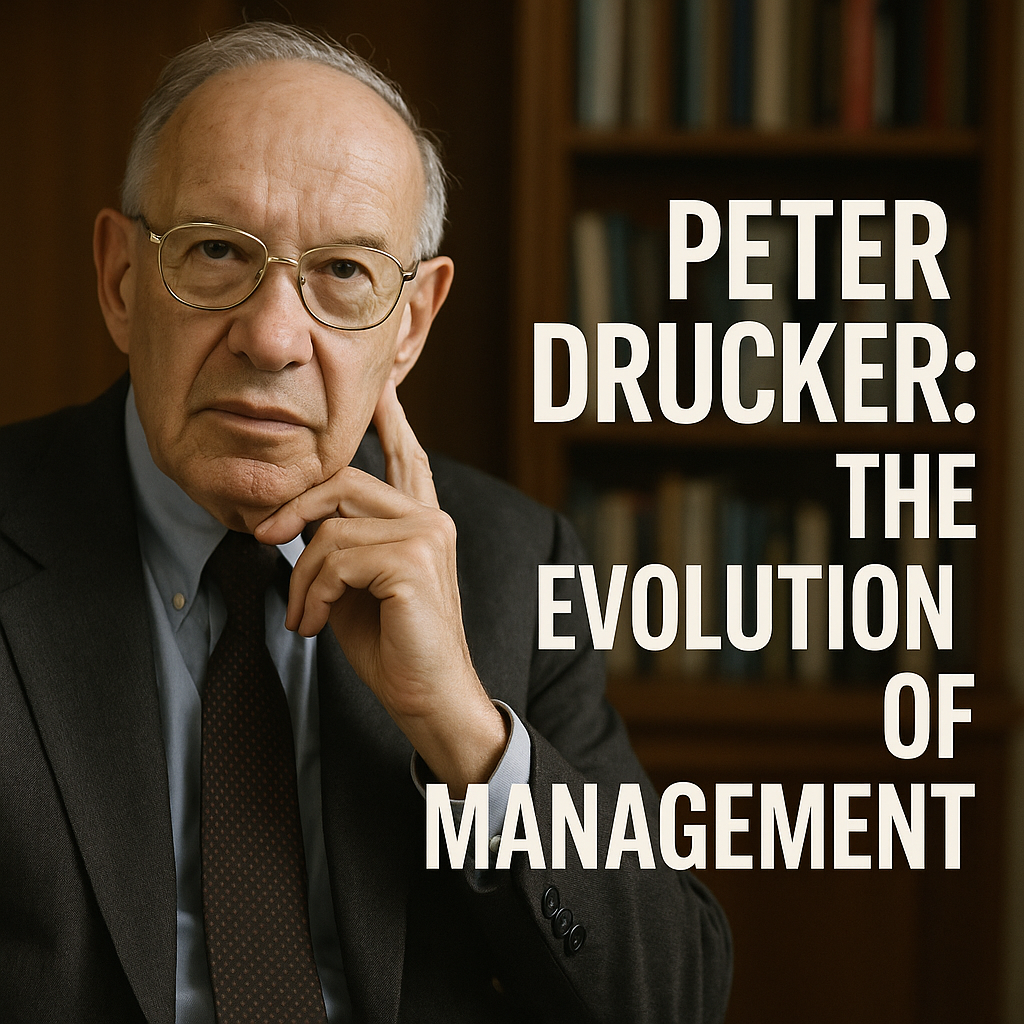
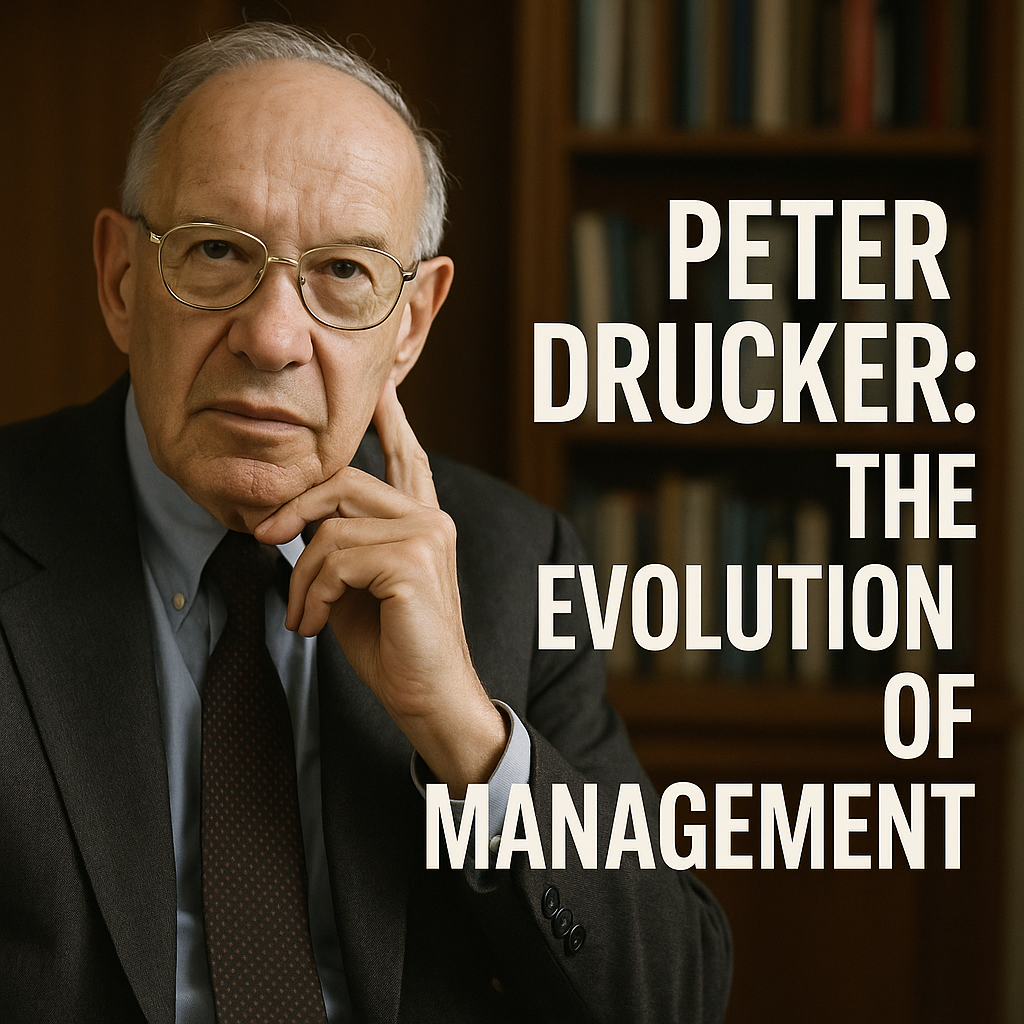
Peter Drucker: The Evolution of Management
Peter Drucker revolutionized management by prioritizing human purpose over technical efficiency. His legacy defines the 2026 professional landscape, establishing management as a social practice that bridges organizational goals with societal responsibility.
The Shift to a Human-Centered Management Philosophy
Drucker redefined management as a human-centered discipline, viewing organizations as social institutions. Prioritizing motivation and strengths aligns individual goals with institutional purpose, driving performance and social responsibility during economic volatility.
Beyond the Machine: Rejecting Pre-Drucker Management Theories
Pre-Drucker management prioritized rigid efficiency and control. Taylor’s scientific management and Fayol’s administrative principles treated workers as mechanical parts. Drucker eventually challenged these dehumanizing systems, advocating for innovation through human-centered leadership.
Management as a Social Institution and Moral Practice
Drucker viewed management as a social institution responsible for the common good. Beyond profit, leadership requires integrity and innovation to solve societal problems, ensuring ethical governance protects employees and fosters community trust.
The Intersection of Multiple Disciplines
Drucker viewed management as a liberal art, blending psychology, ethics, and sociology. Effective leaders must integrate these interdisciplinary insights to navigate organizational complexity, motivate diverse teams, and drive institutional renewal.
Navigating Technological Disruption and Global Crises
Drucker’s theories help navigate 2026’s geopolitical and technological disruptions. By prioritizing knowledge worker productivity and social innovation, leaders transform crises into renewal, ensuring technology serves human needs through human-centered management.
Primary Bibliography and Modern Influence
Drucker’s seminal books, including The Effective Executive, define modern management. These texts teach that leadership is a learned discipline, emphasizing social responsibility and organizational efficiency to shape today’s global business curricula.
Source Audit
This analysis synthesizes data from the Drucker Institute, Harvard Business Review, and Claremont Graduate University. Additional insights on modern strategy and knowledge work come from McKinsey Quarterly and MIT Sloan.
Human-Centered Management Philosophy
Peter Drucker redefined management as a human-centered social institution rather than a mechanical process. By prioritizing ethics, motivation, and social responsibility, he transformed organizations into purposeful communities driven by human values.
Management as a Social Institution
Peter Drucker redefined management as a human-centered social institution. Moving beyond mechanical efficiency, he prioritized ethical leadership and community service, framing management as a liberal art essential for societal stability and innovation.
Pre-Drucker Management Theories and the Industrial Machine
Before Drucker, management focused on Taylor’s Scientific Management and Fayol’s administrative principles. These rigid, engineering-based systems prioritized industrial efficiency and standardization, often treating workers as mechanical components rather than human assets.
Drucker’s Rejection of the Machine View
Peter Drucker rejected mechanical analogies, viewing organizations as social communities. He prioritized human values and strengths, redefining managers as conductors who harmonize individual talents and ethical responsibility to achieve collective performance.
Management at the Intersection of Multiple Disciplines
Drucker defined management as a multidisciplinary liberal art. By integrating psychology, ethics, and sociology, leaders better navigate social complexity and technological shifts to foster meaningful innovation and effective human collaboration.
Management’s Ethical and Moral Role
Drucker viewed management as inherently moral. Every decision impacts employees and society, requiring integrity to prevent systemic failure. Leadership must prioritize stewardship and social responsibility over mere profit or control.
Organizations as Human Endeavors
Drucker viewed organizations as social institutions serving societal needs. Beyond profit, management must prioritize human well-being, providing meaningful work and fostering personal development to ensure long-term institutional renewal and community-focused leadership.
The Impact of Crises on Management Thinking
Global crises catalyze institutional evolution. Drucker viewed disruptions as opportunities to replace rigid systems with flexible, human-centered governance, using innovation to transform chaotic societal shifts into productive, purposeful organizational growth.
Drucker’s Rejection of the Machine View
Drucker rejected the industrial view of organizations as machines. He argued that management is a human discipline, prioritizing judgment and social values over mechanical efficiency to treat organizations as living social organs.
Management as a Human Discipline and Social Institution
Drucker prioritized human dignity, viewing management as a social responsibility. Leaders must cultivate individual strengths and foster ethical relationships, driving social innovation and community well-being beyond mere economic output or technical procedures.
The Intersection of Multiple Disciplines
Drucker viewed management as a multidisciplinary liberal art. By integrating psychology, ethics, and sociology, leaders can navigate economic volatility and drive social cohesion, moving beyond mere administration to achieve organizational excellence.
Management’s Ethical and Moral Role
Management is a moral endeavor; every decision impacts employees and society. Drucker emphasized integrity and stewardship, ensuring governance prioritizes long-term stakeholder needs over short-term profits, especially during periods of systemic vulnerability.
Organizations as Human Endeavors
Drucker viewed organizations as human-centric entities serving societal needs. By prioritizing knowledge worker productivity and innovation over cost-cutting, leaders foster institutional renewal and meaningful value, ensuring resilience amid global instability.
Management at the Intersection of Multiple Disciplines
Peter Drucker defined management as a liberal art, blending ethics, psychology, and history. Leaders must prioritize human strengths and social responsibility over technical metrics to ensure long-term organizational and societal stability.
Management as a Moral and Ethical Discipline
Peter Drucker viewed management as a moral duty. Rooted in the “do no harm” principle, managers must prioritize integrity and social responsibility to ensure organizational health and professional stability during volatility.
Drucker’s Rejection of the Machine View
Drucker rejected mechanical corporate views, favoring social communities driven by human values. By prioritizing individual dignity over rigid standardization, organizations can leverage human strengths to navigate disruption and foster ethical institutional change.
Organizations as Human Endeavors
Drucker viewed organizations as social institutions focused on human well-being. By prioritizing people over profit, leaders foster innovation. Modern scholars still emphasize balancing economic performance with meaningful societal responsibility and ethics.
The Impact of Crises on Management Thinking
Drucker viewed global crises as catalysts for institutional renewal. By prioritizing ethical governance and human values during disruption, leaders can transform systemic vulnerabilities into opportunities for resilient growth and societal progress.
Organizations as Human Endeavors
Peter Drucker viewed firms as social institutions, not just economic engines. He argued their core purpose is serving society by creating customers, fostering resilient cultures through missions that transcend technical tasks.
Drucker’s Rejection of the Machine View
Drucker rejected the “machine analogy,” viewing employees as valued individuals rather than replaceable cogs. He argued that management must prioritize human ethics and autonomy over mechanical efficiency to drive organizational performance.
Pre-Drucker Management Theories: Efficiency and Control
Early management focused on efficiency. Taylor prioritized labor division and output, while Fayol emphasized hierarchy. These technical theories maximized industrial productivity but often ignored human factors and social innovation within the workforce.
Management as a Human Discipline and Social Practice
Scholars emphasize Drucker’s view of management as a human discipline. Beyond technical tools, effective leadership requires mastering psychology, sociology, and ethics to navigate social dynamics across corporate, nonprofit, and government sectors.
Human-Centered Management Philosophy in the AI Era
Drucker’s human-centered philosophy remains vital amidst AI disruption. By prioritizing judgment and social cohesion, leaders transform systemic vulnerabilities into opportunities for renewal, ensuring organizations thrive as healthy, purpose-driven social institutions.
The Impact of Crises on Management Thinking
Global crises demand Drucker’s moral management. Leaders must prioritize societal contribution and stewardship, balancing economic performance with human values to ensure organizations act as stabilizing forces and ethical pillars during instability.
Impact of Crises on Management Thinking
Drucker viewed global crises as catalysts for institutional renewal. In the AI era, human judgment remains the ultimate competitive advantage, transforming management into a human-centric discipline focused on knowledge worker productivity.
Management as a Social Institution
Peter Drucker viewed organizations as vital social institutions. He argued that management must prioritize societal well-being and innovation over profit to ensure stability, a principle still taught at Claremont Graduate University.
Pre-Drucker Management Theories and Scientific Management
Early management, led by Taylor and Fayol, prioritized scientific efficiency and standardization. These models treated workers as mechanical components, maximizing industrial output while largely disregarding human motivation, ethics, and individual value.
Drucker’s Rejection of the Machine View
Peter Drucker redefined organizations as social communities, not machines. By prioritizing human judgment and ethics over technical procedures, he proved that performance stems from leadership integrity and fostering individual strengths.
Management at the Intersection of Multiple Disciplines
Drucker defined management as a “liberal art,” blending psychology, ethics, and social sciences. This multidisciplinary approach helps leaders navigate modern challenges, effectively managing knowledge workers while balancing business strategy and organizational governance.
Management’s Ethical and Moral Role
Peter Drucker viewed management as a moral discipline rooted in integrity. Leaders must embrace social responsibility and stewardship, prioritizing human-centered ethics to build trust and maintain institutional health during technological disruptions.
Organizations as Human Endeavors
Drucker viewed organizations as societal pillars. During crises, prioritize human-centered management and decentralization. By treating employees as innovators rather than costs, you foster resilience and drive social innovation that benefits customers.
Comparing Management Eras: From Machines to Social Institutions
Leadership evolved from Taylor’s rigid industrial efficiency to Drucker’s human-centric philosophy. This shift transformed workers from mechanical tools into autonomous contributors, prioritizing social purpose and decentralized decision-making over mere output.
| Feature | Scientific Management | Modern Management |
|---|---|---|
| Focus | Task efficiency | Human strengths |
| Worker | Economic man | Knowledge worker |
| Structure | Hierarchy | Autonomy |
Pre-Drucker Management Theories and the Machine View
Scientific Management viewed organizations as machines, prioritizing standardization and financial incentives. Fayol later introduced administrative functions, emphasizing technical efficiency over ethics. In this rigid framework, replaceable workers were managed strictly for high-volume output.
Drucker’s Rejection of the Machine Analogy
Drucker rejected mechanistic management, viewing organizations as social communities. He prioritized human judgment and ethical responsibility, championing “knowledge workers” who require autonomy and intellectual development rather than rigid, machine-like control.
Management as a Social Institution and Practice
Drucker viewed organizations as vital social institutions responsible for community well-being. Consequently, management must prioritize societal health over mere profit, ensuring every decision fosters long-term stability across all sectors.
The Human-Centered Management Philosophy
Claremont’s Drucker School champions human-centered management, prioritizing people and values over technical procedures. This philosophy suggests that human motivation drives performance, helping leaders navigate disruption while fostering individual growth and innovation.
Management at the Intersection of Multiple Disciplines
Drucker defined management as a liberal art, blending psychology, ethics, and sociology. Effective leaders must synthesize these interdisciplinary insights to navigate complex human dynamics and drive innovation during systemic change.
Management’s Ethical and Moral Role
Drucker viewed management as a moral discipline. Since managers influence livelihoods, they must prioritize integrity. Ethical decision-making isn’t optional; it transforms businesses into responsible social institutions that benefit the greater community.
Organizations as Human Endeavors for Social Good
Drucker viewed organizations as social instruments for human well-being. During crises, management must look beyond survival, aligning organizational purpose with societal renewal to create lasting value and ensure meaningful public stability.
Primary Bibliography and Modern Influence
Drucker’s foundational texts redefined management as a human-centered discipline. Key works like The Effective Executive and Innovation and Entrepreneurship established essential principles for leadership, systematic innovation, and the modern knowledge economy.
Management as a Human-Centered Social Institution
Drucker redefined management as a human-centered social institution, not a profit machine. He emphasized that prioritizing human values and motivation across all sectors drives innovation and ensures a healthy, functioning society.
The Rejection of the Machine View and Scientific Management
Early management theories by Taylor and Fayol prioritized rigid mechanical efficiency. Drucker revolutionized the field by viewing organizations as social communities, emphasizing that human judgment and ethics are more vital than standardization.
Management at the Intersection of Multiple Disciplines
Drucker defined management as a liberal art, merging psychology, ethics, and sociology. This multidisciplinary practice requires leaders to master human dynamics and social innovation to navigate complex, systemic organizational challenges effectively.
The Ethical and Moral Role of Management
Drucker viewed management as a moral stewardship rooted in integrity. Beyond profit, leaders must prioritize ethical decisions and social responsibility to ensure the long-term health of both organizations and their communities.
Institutional Renewal Amidst Global Crises
Global crises demand institutional renewal through human-centered leadership. By prioritizing social innovation and ethical governance, organizations can transform disruptions into opportunities, fulfilling Drucker’s vision of improving the human condition through purpose.
The Drucker Critique in the Age of AI
Modern scholars are re-evaluating Drucker’s theories against algorithmic management. As AI redefines knowledge work, leaders must balance data-driven automation with human-centered decentralization to maintain organizational purpose in a digital-first economy.
Management as a Social Institution and the Rejection of the Machine View
Drucker rejected mechanical labor views, redefining management as a social institution. He integrated psychology and ethics, prioritizing human development over technical efficiency to ensure organizations serve both employees and broader societal needs.
Management’s Ethical Role and Institutional Responsibility
Drucker viewed management as an ethical discipline centered on integrity. Leaders must act as social stewards, using human judgment to prioritize institutional responsibility and long-term stability over mere technical strategy.
“Management is doing things right; leadership is doing the right things.”
Frequently Asked Questions
Legacy of Peter Drucker
Drucker revolutionized management by prioritizing human-centered philosophy over mechanical efficiency. He championed knowledge workers, decentralization, and social responsibility, viewing management as a liberal art essential for ethical, productive organizational leadership.
Source Audit and Academic Synthesis
Our analysis synthesizes data from the Drucker Institute, Harvard Business Review, and Claremont Graduate University. These archives document Drucker’s evolution from administrative theory to human-centered management and knowledge-based social ecology.
Management as a Social Institution and Human Discipline
Peter Drucker viewed organizations as social institutions, not just economic tools. He defined management as a human discipline that prioritizes ethics, community responsibility, and individual strengths over mere technical efficiency or mechanical performance.
The Evolution from Scientific Management
Early management theories by Taylor and Fayol prioritized industrial efficiency over human value. Drucker revolutionized organizational theory by rejecting this mechanical view, instead framing organizations as human-centric systems driven by individual contribution.
Human Centered Management in the Age of Technological Disruption
Drucker’s human-centered philosophy remains vital, framing modern crises as opportunities for institutional rehumanization. Current leaders bridge technical disruption with social cohesion, ensuring management coordinates human effort while maintaining ethical societal stability.